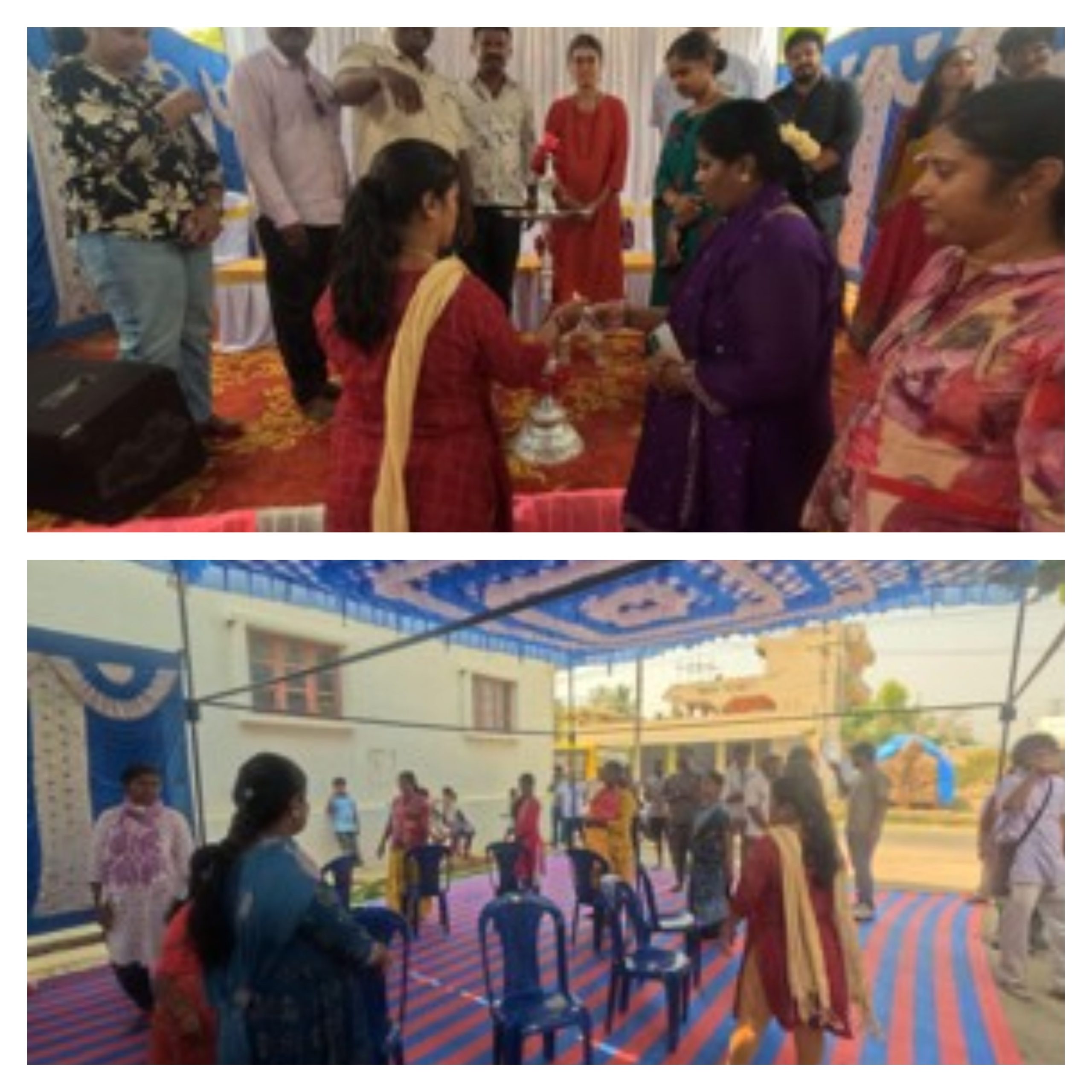
On April 25, 2026, a cultural event took place at Jalige Gram Panchayat as part of our students’ community engagement course. We were pleased to welcome chief guests such as Prof. Narendra Raghunath, Dr. Setu Havanur, Dr. Ranjana R, Ms. Ragini Reddy from Vidyashilp University, Panchayat Secretary Mr. Narasimhamurthy, and other respected officials. The event aimed to raise awareness of social issues and strengthen university–community ties. Activities featured a Rangoli contest, Lemon and Spoon race, Musical Chairs for women and children, and cultural performances by locals and students. The festival embodied community spirit, drawing participation across all ages. It was warmly embraced by Panchayat members, who appreciated the university’s support for local artists and the powerful sense of unity it fostered within the community.
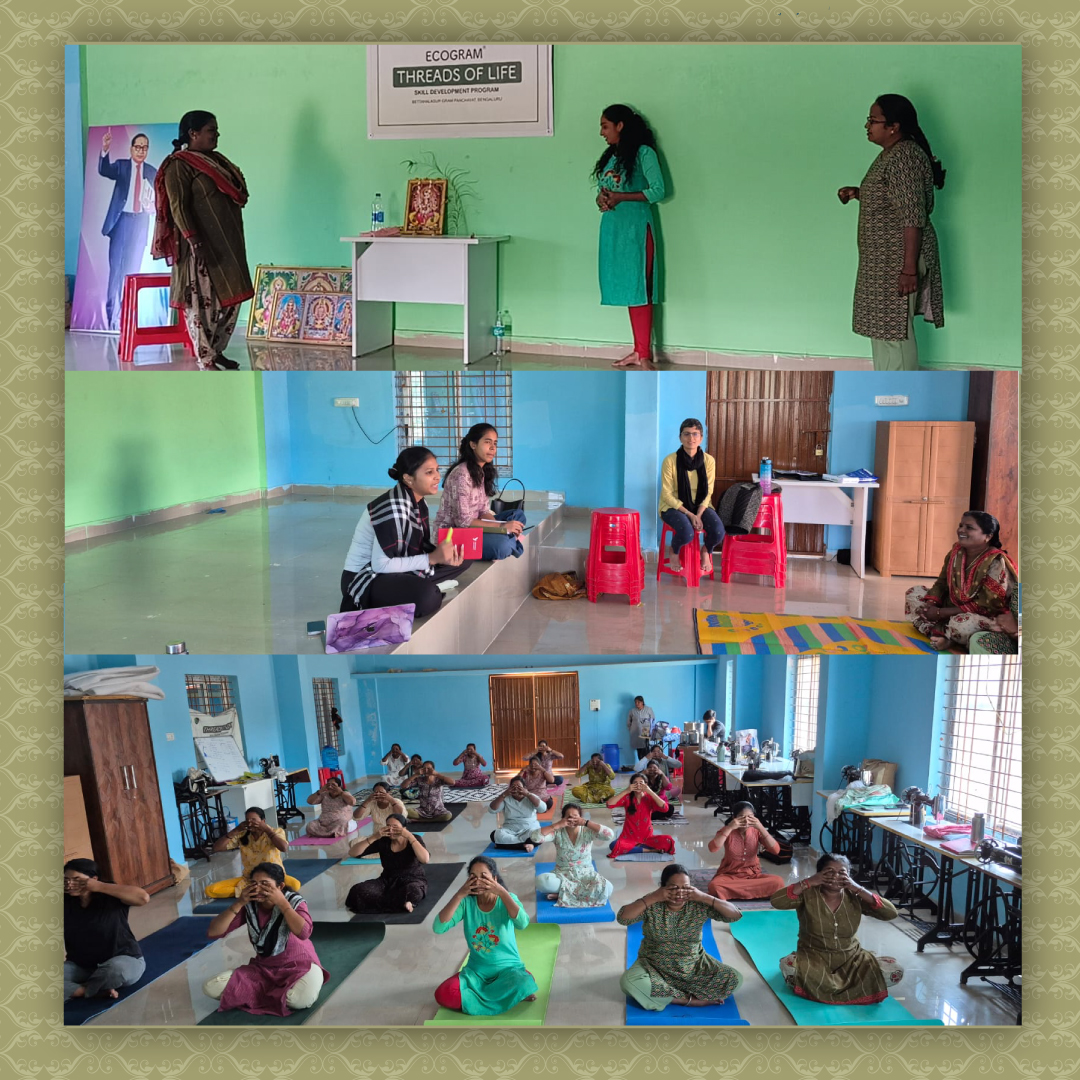
On 8th December, at Ambedkar Bhavan in Bettadahasiru village, the people gathered to learn about stress and anger management from our experts. Everyone paused, reflected and shared their journey. The event marked the 4th session of our collaboration with TAICT, and was led by Dr. Ranjana Raghunathan, Dr. Setu Havanur, and Gaana Reddy, who gently guided participants to introspect on the situations that trigger their stress and how it shows up in their bodies and relationships. Through role-play, honest conversations, and self-reflective activities, together they explored the difference between reacting and responding with awareness, and the participants listened attentively. The workshop closed with simple yoga, relaxation practices, and a promise - to carry the day's learnings back into their daily lives, to breathe a little deeper, to slow down a little more, and remind themselves to stress less and live more.
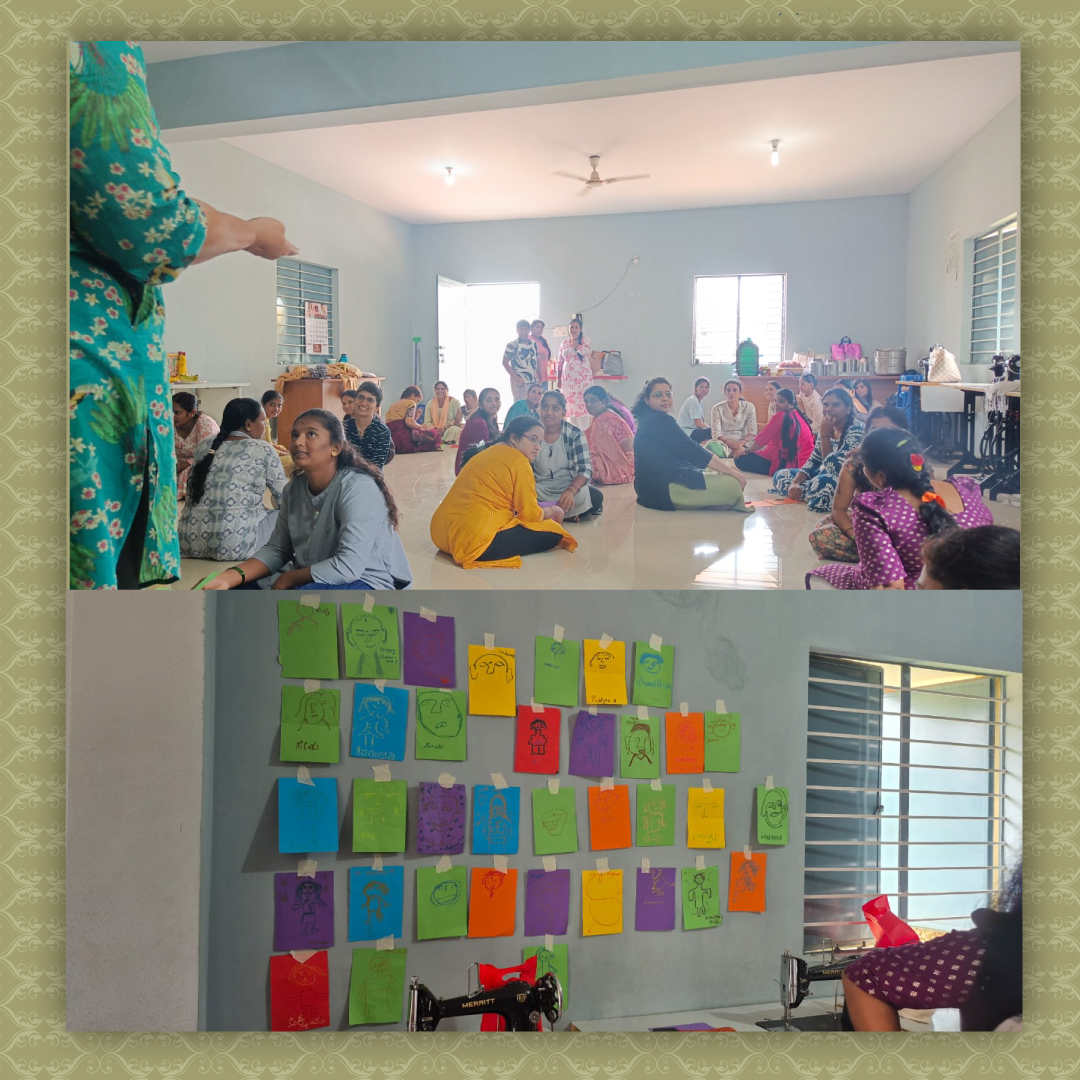
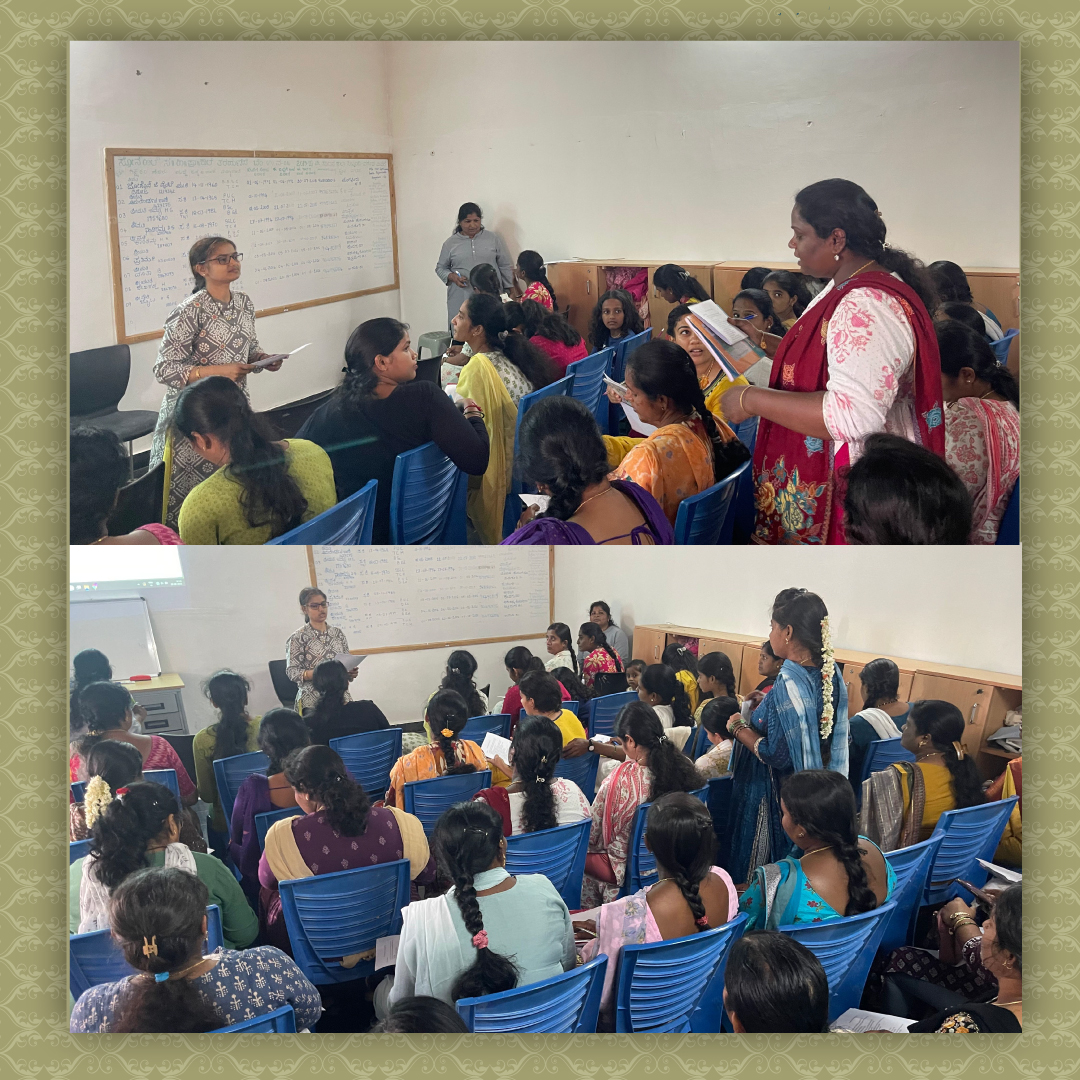
A workshop on women’s mental health was facilitated on October 27th, by Ms. Pallavi Chander at Bettahalasuru Ambedkar Bhavan, in collaboration with TAICT and Vidyashilp University, as part of the community mental health initiative. Ms. Chander facilitated the workshop through interactive activities, beginning with participants pairing up to draw portraits of each other, which served as a foundation for discussions on identity, self-perception, and autonomy related to women’s clothing choices. An activity involving drawing was used to explore issues of shame and silence associated with certain areas, encouraging conversations around stigma, body image, and the intersection of morality and attire, opened to discussions addressing topics such as familial control over women’s bodies after puberty, self-censorship after marriage, and instances where women have reclaimed their freedom to dress as they choose. Participants engaged in broader conversations about identity and self-awareness, often accompanied by humor and laughter. The conversation also extended to areas such as sex education for youth, with many participants expressing a desire for sessions on how to discuss reproduction and sexuality with their children. Throughout the workshop, attention was given to breathing techniques and movement, emphasizing that stress affects both the body and mind, and highlighting the interconnectedness of physical and mental well-being.
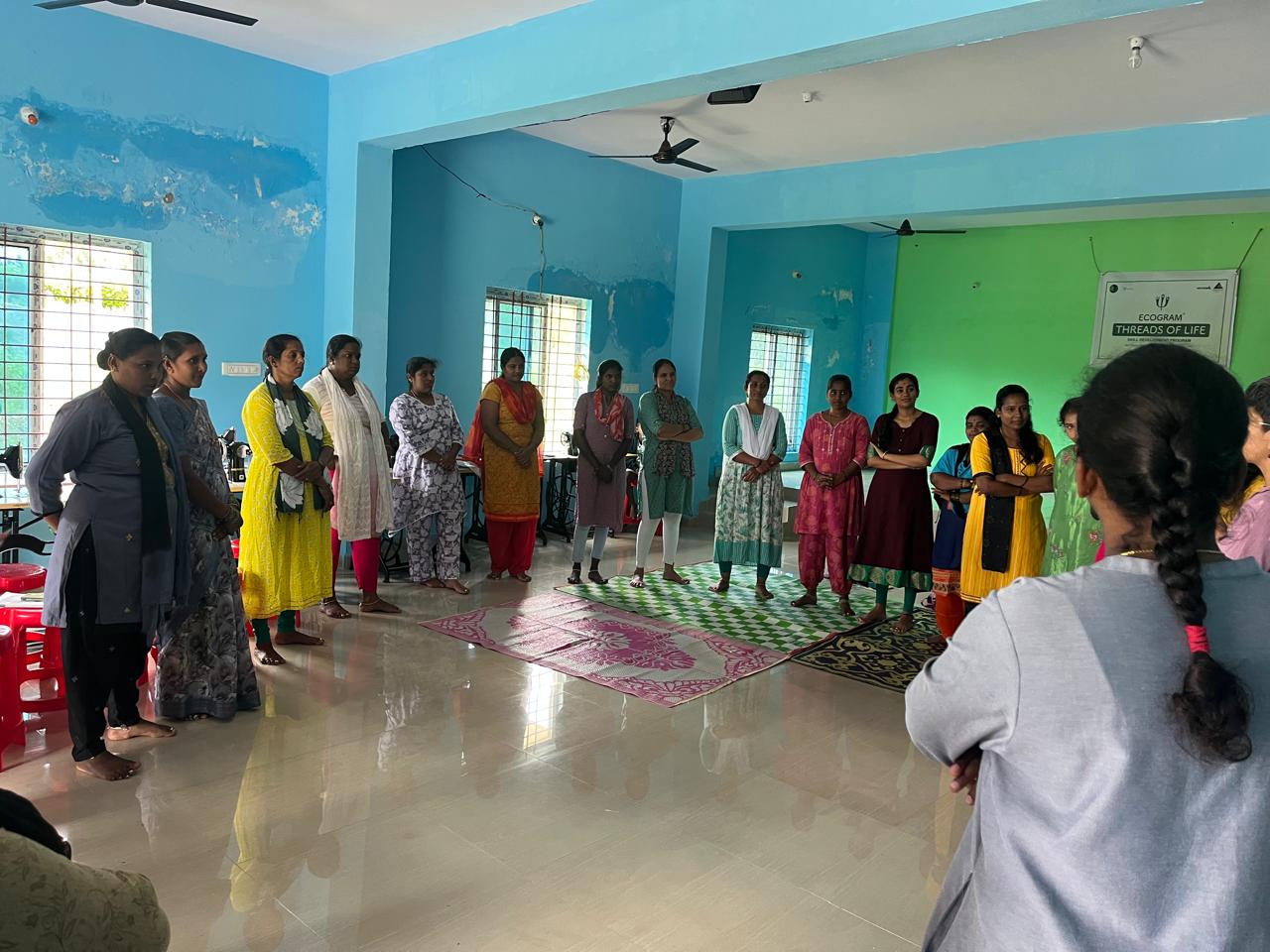
Held on September 18, 2025, at Kudurgere Community Hall in collaboration with TAICT, the session was facilitated by Dr. Setu Havanur and Dr. Ranjana Raghunathan. Two students of the community psychology course also accompanied them to observe the session. Having a team building activity and participants split into groups were given case studies of real women facing mental health issues in different settings, such as family, work, and the hospital, and asked to create a scenario using a roleplay activity, participants took to the activity with great enthusiasm and were able to read, discuss, and enact with great depth, forming the basis for discussion on the common mental health disorders such as anxiety, depression, and menstruation-related disorders (e.g., premenstrual syndrome and premenstrual dysphoric disorder). The session focused on differentiating between natural variations in mood and anxiety and disorders based on different symptoms and duration of their presence. Leading to an engaging discussion. Some members also shared their experiences of how they stood up against mental health problems being perceived as God’s curse, leading community members to successfully convince others to seek professional care.
“Women’s Mental Health in Everyday Life” This session was conducted on 25th August 2025 at Tharahunase community hall, in association with TAICT. The session, conducted by Dr. Ranjana R and Dr. Setu Havanur, addressed understanding of mental health in the community through activities and open discussions, as well as wellness, attitudes and beliefs, and what participants’ expectations were from the session. With a discussion on myths versus facts about mental health, facilitated by Dr. Setu Havanur, which opened up a diverse discussion on beliefs, socially accepted responses, and the reality of mental health support, most women understood the stigma and wrong beliefs associated with people with mental illnesses. However, these beliefs continue to influence their day-to-day behaviours. Giving more space and direction for further discussions.
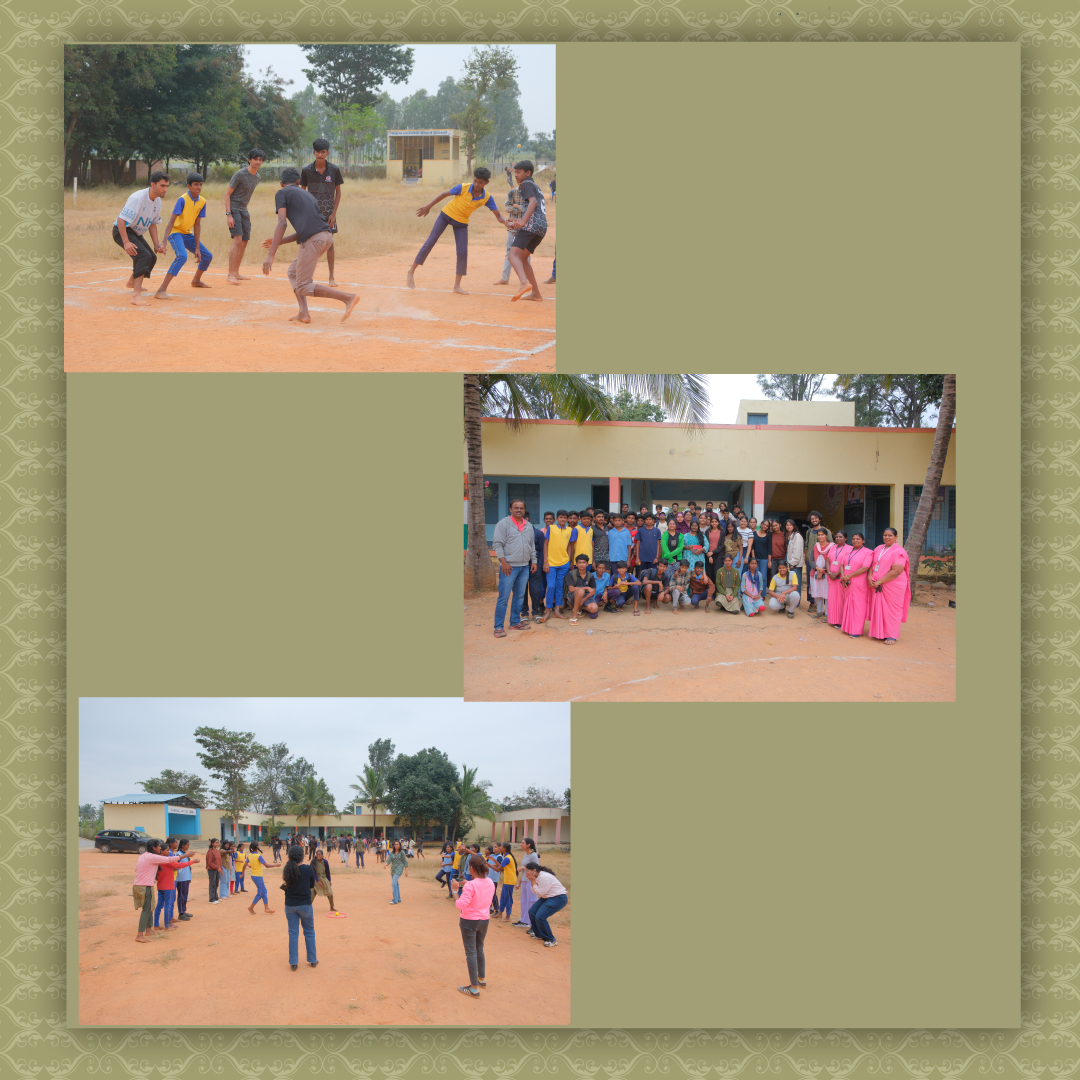
AATA MANIA 2025 lit up the Juttanahalli Ground in Bangalore North on November 29 with an action-packed day of sport, teamwork, and community bonding! Organised through a collaboration between students of the Community Engagement course at Vidyashilp University and the Juttanahalli Gram Panchayat, the festival brought together participants across the village for a vibrant line-up of games — Dodgeball, Kabaddi, Volleyball, and Dog & the Bone. Each match was filled with energy and enthusiastic participation, reflecting the true spirit of sportsmanship and the power of collective engagement. The event showcased how youth leadership and grassroots partnerships can create meaningful spaces for connection and celebration.
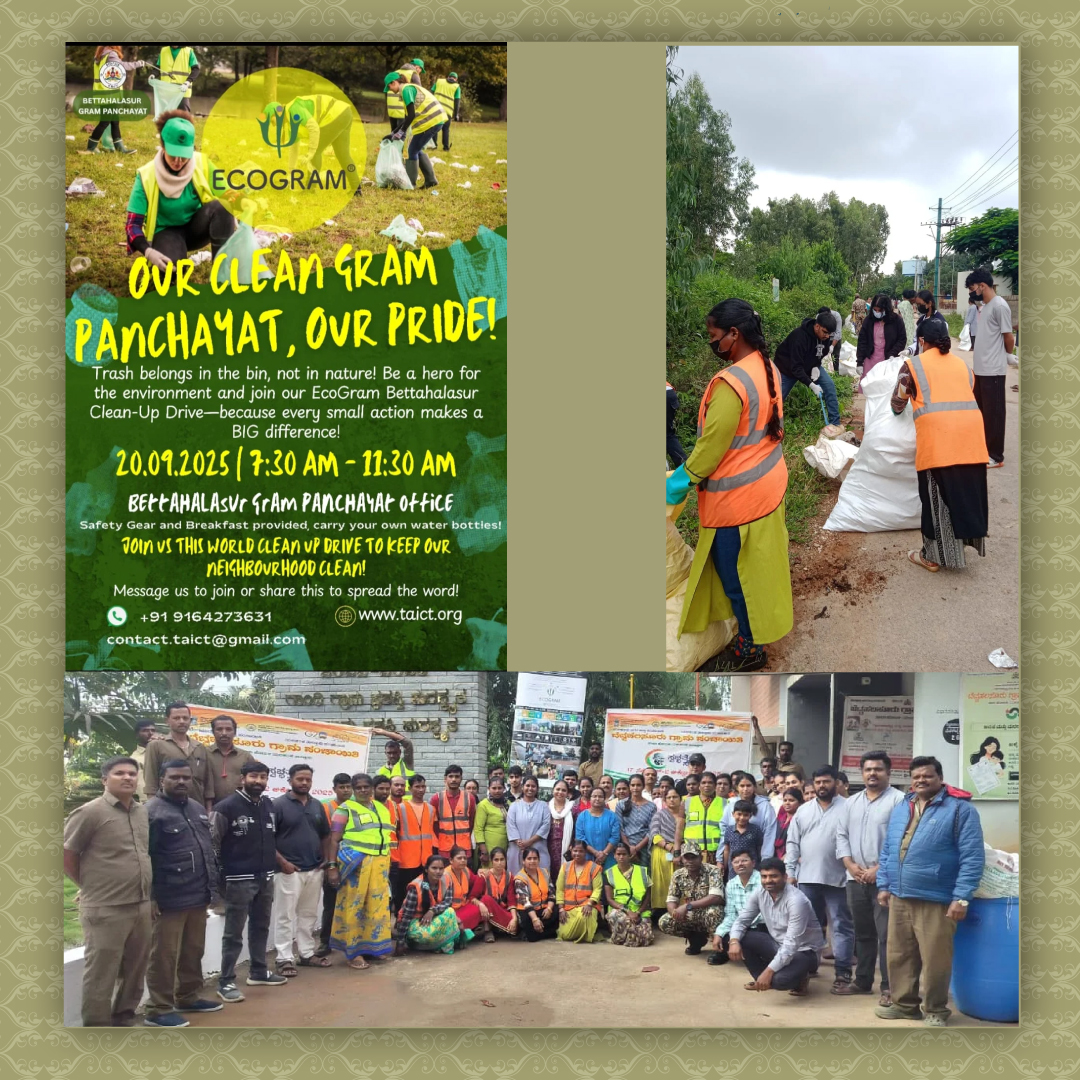
First-year students participated in a community clean-up initiative organized by Ecogram at Bettahalasuru Gram Panchayat on Saturday, September 20th, as part of their community engagement and service experience course. We are pleased to acknowledge that they were among 64 dedicated volunteers who contributed to this effort, collectively collecting a total of 768 kilograms of waste.The collective efforts have positively impacted both our environme nt and the local community. Let us continue to collaborate toward a cleaner and more sustainable future.
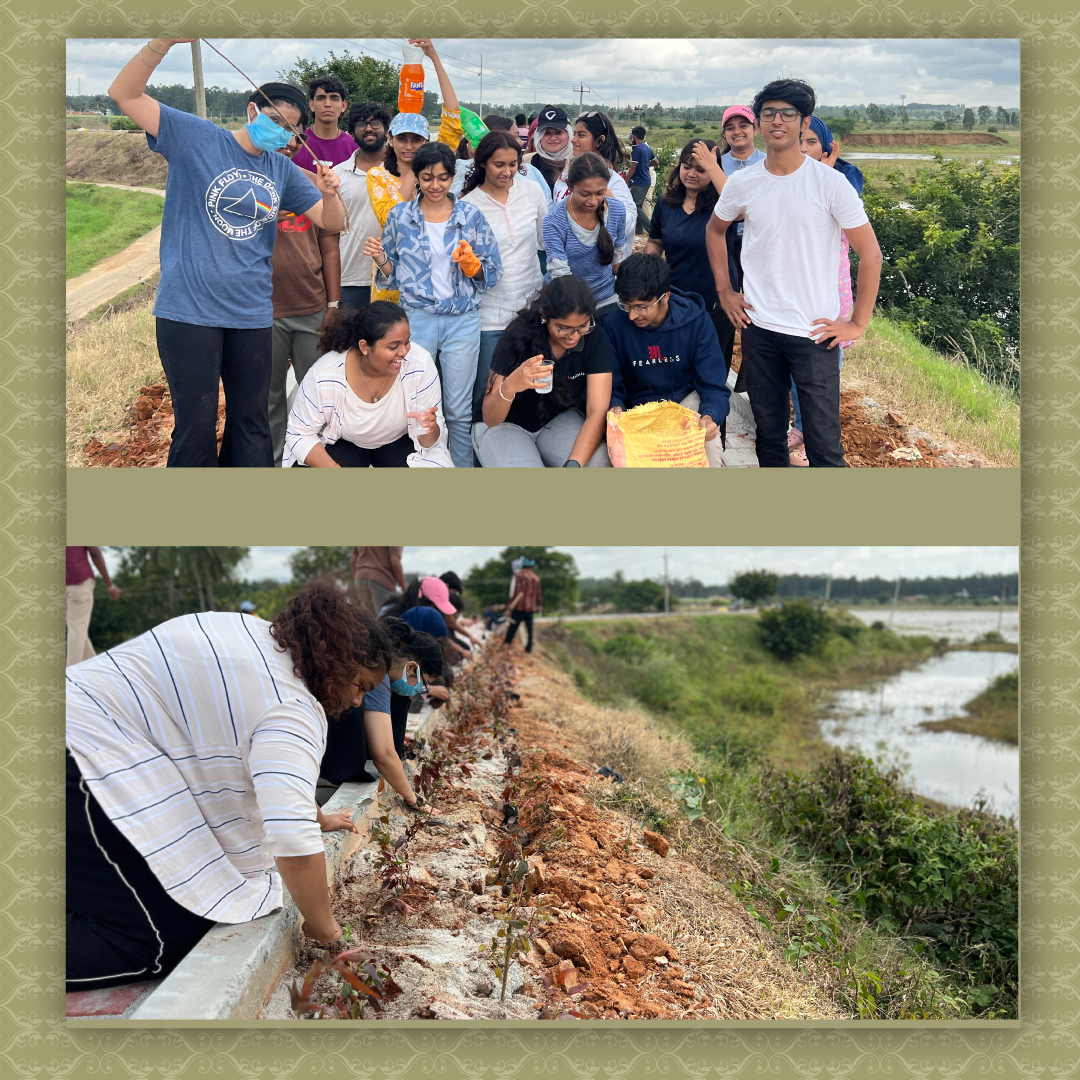
Planting Seeds for a Greener Tomorrow - On Saturday, 27th September, students from the first batch of Community Engagement and Service Experiences joined hands with the Jalige Gram Panchayat for a Sapling Planting Drive at Jalige Lake. Together, they planted saplings along the lakeside pathways — a small but meaningful step towards conserving and rejuvenating this vital waterbody. More than just an activity, this was about students learning the power of collective responsibility — how every action, however small, can ripple into impact for both community and environment. At Vidyashilp University, we are proud to see our students not only grow in classrooms, but also root themselves in values of sustainability and civic engagement.
In the first year of community engagement, VU partnered with the Satya Foundation in the Jakkur area of North Bangalore. VU students contributed to four of the Foundation’s community development projects. All students received an orientation covering the organization, the Jakkur community and its environs in northern Bangalore, as well as an overview of their assigned activities. They participated in a community walk and mapping exercise and assisted on projects like, Early childhood education, Self help groups, solid waste management and lake conservations
During their second year, students engaged in a diverse range of projects in collaboration with organizations such as the Satya Foundation and the Humanist Centre for Medicine. The Humanist Centre for Medicine is a Bangalore-based non-profit organization dedicated to addressing funding challenges faced by cancer patients who are unable to afford treatment. Student projects included initiatives on Breast Cancer Screening at VU, efforts to establish a Zero Waste Campus at VU, community mapping around the university, assessments of Anganwadi centers, conservation activities at Jakkur Lake, and waste management block mapping in and around ward 5.
In May 2025, following an orientation session with representatives from each organization, students engaged in various projects, including waste management initiatives and a lake cleanup drive in collaboration with TAICT. They also participated in Ayurvedic awareness campaigns for farmers in partnership with the School of Ancient Wisdom, as well as health awareness programs conducted in collaboration with the Humanist Centre for Medicine. Additionally, students carried out an internal waste management audit focused on promoting sustainability and environmental responsibility at Vidyashilp University. Other projects involved botanical initiatives with TDU, where students collaborated with the Yuva Sanchalana group to develop a website, and research on ancient Indian architecture in partnership with IISc.
Dr. Gayathri Vasudevan stressed upon the importance of having community development that addresses the needs of the community. These needs, Dr. Vasudevan observed, are gaps in the system that are rich with business opportunities for the students. The orientation was followed by a training session led by Mr. Benson Isaac on the 22nd of April 2025. Through various activities, Mr. Benson emphasised on the need for students to realise that in order to bring about a change in the community, they must understand that they are also implicated in the problems that the community faces. Overall, the orientation and training session helped the students to secure an overview into the field work as part of the Community Engagement course
During the second lecture series of the following year, Dr. Annapurna Kamath from Satya Foundation delivered an overview of a holistic community engagement model focused on environment, education, health, women's empowerment, and waste management. Additionally, a presentation was conducted by Dr. Punyashree R. M. of Cytecare Hospital and Ms. Geethu Bijil from the Humanist Centre for Medicine. Dr. Punyashree provided information to students regarding the causes, risks, and treatment options for cancer, with particular emphasis on cancers affecting women, such as breast and cervical cancer. Ms. Bijil discussed the initiatives undertaken by the Humanist Centre for Medicine in promoting health awareness, especially through collaborations with organizations such as Enable India and Magic Fingers.
To anchor the community engagement projects, we organised a series of talks and conversations by experts in the field of community work over the years, which included diverse organisations, and modes of doing community work.
The series of discussions established the context for current issues in Bangalore and provided students with an overview of some of the major societal challenges. Additionally, students gained insights into various community engagement strategies for addressing the diverse and complex issues faced by Bangalore. During the inaugural year, the following professionals engaged students in meaningful discussions:
- Dr. Annapurna Kamath – Founding Trustee, Satya Foundation
- Mr. Kiran Mandanna – Outreach India, specialising in rural development and women’s self-help groups
- Ms. Sandya Narayanan – Member, Solid Waste Management Roundtable, Bangalore
- Dr. Shanthi Tummala – Community Mobilizer for Waste Management, South Bangalore
- Ms. Bianca Fernandes – Hasiru Dala, an initiative dedicated to dignifying ragpickers